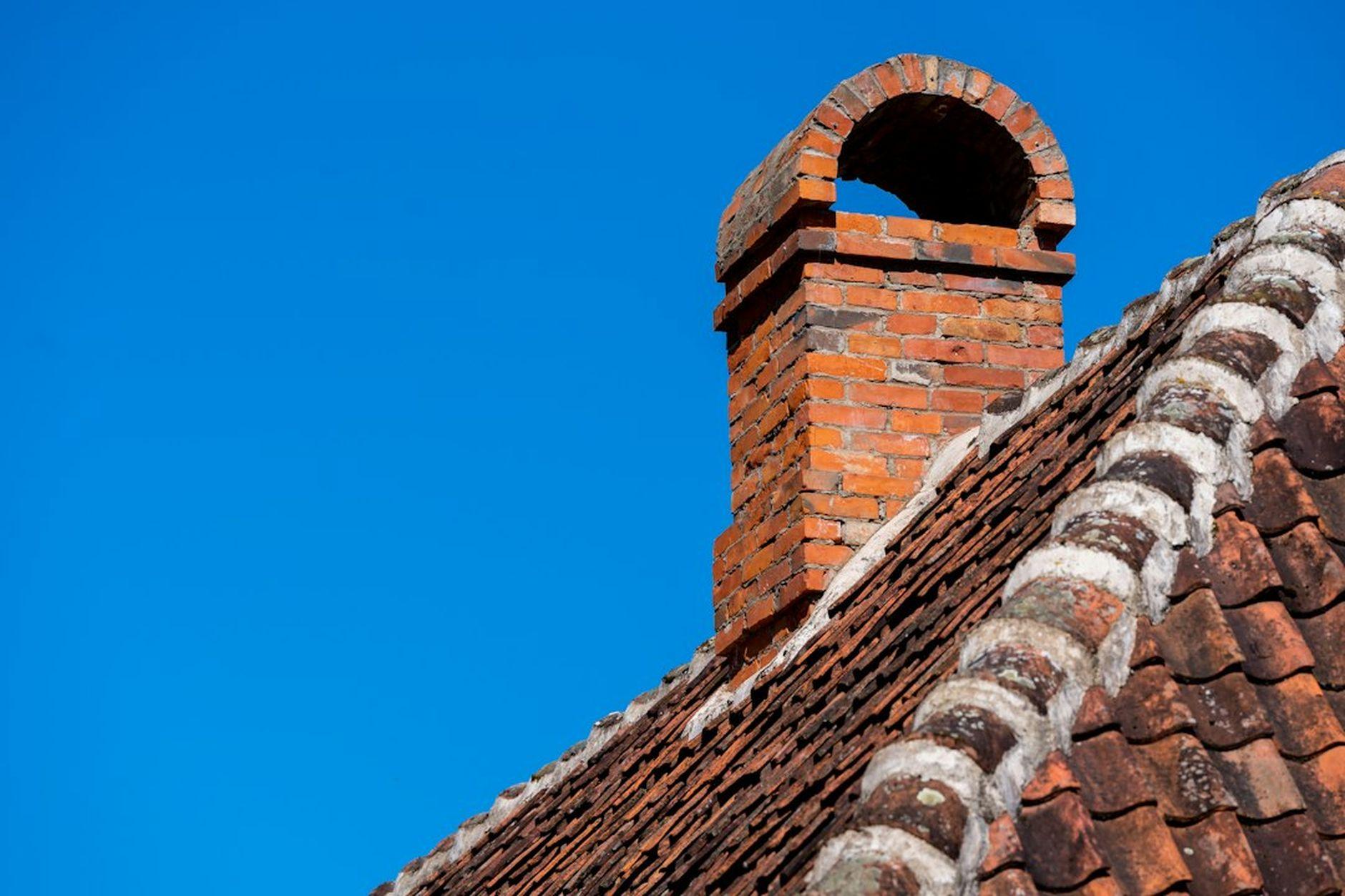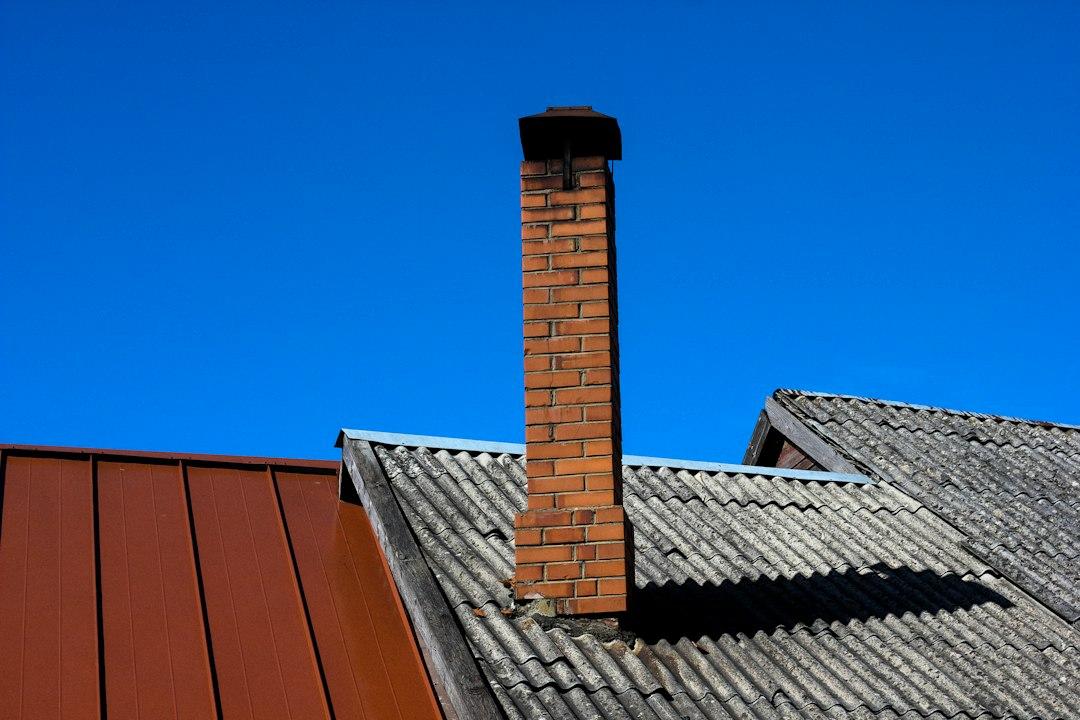
A chunk of gray cement in the gutter. Thin dark lines across the slab at the top of the stack, visible from a neighbor's upstairs window. Water dripping onto the damper in a hard rain even though the cap is fine. Each of those is a crown problem, and in Lakewood it is one of the most common chimney repairs we price. This post covers what we look for, how we choose the repair, and what decides the figure on your quote.
What the crown does on your house
Every masonry chimney ends in a slab at the top, with the flue tile standing up through the middle. That slab is the only thing between the open sky and the brick and mortar below it. When it is sound and shaped right, rain lands on it and runs off over the edge, away from the face of the chimney. When it cracks, rain goes into the crack, into the brick, and down.
On a lot of older houses here, the slab was never built for that job. Masons often finished the top with a flat trowel of the same mortar used in the joints, flush with the edge of the brick, with no overhang and no gap around the tile. That kind of top holds water instead of shedding it, and after a few decades of sun and winter rain, it cracks.
Signs it has started to fail
You do not need to climb up to spot most crown trouble. These are the signs owners tell us about:
- pieces of cement on the roof, in the gutter or on the ground below the chimney
- dark streaks running down the brick from the top course
- white powder (efflorescence) on the brick outside or on the smoke chamber inside
- water on the damper or in the firebox after rain, with the cap still in place
- a rust stain on the cap where it meets the top of the chimney
A crown crack also lets water reach the top of the flue tile, where it slowly breaks down the mortar holding the tile in place.
Two repairs, and how we choose
There are really two kinds of crown work, and the state of the slab decides which one you need.
Sealing. If the cracks are fine and the slab is still bonded to the brick, we clean it, fill the cracks and coat the top with a flexible crown sealant made for the purpose. The coating moves with the slab as it heats and cools, so the cracks stay closed. This is the smaller job, and it only works on a crown that is still in one piece.
Recasting. If the slab is broken through, loose, crumbling at the edges or was never shaped to shed water, sealing just hides the problem for a season. The old crown comes off down to sound brick. We build a form, set a bond break around the flue tile so the two can move apart, and pour a new crown that slopes outward and overhangs the face of the chimney. That is the larger job, and the one that solves the problem for the long run.
We tell you which one your chimney needs and why. If a crown can be sealed, we do not sell a recast.
What decides your quote
Crown work does not carry a fixed price on our list, because no two tops are the same size or in the same state. The written quote reflects:
- whether the job is sealing or recasting
- how wide the top of the chimney is and how many flues come through it
- how much of the old crown has to be broken off, and whether the top course of brick needs relaying under it
- how easy the roof is to work on, from a low ranch pitch to a steep tile roof
- whether a cap goes on at the same time (a cap is quoted after we measure)
If the top course of brick has loosened under the crown, we say so and put it on its own line. Our masonry repair page covers that work.
Booking the quote
When you are ready for a figure, use the quote request form at the top of this page. Describe what you have seen: pieces of cement on the roof, streaks under the top course, water on the damper after a storm. Add roughly how tall the chimney stands above the roof and whether it serves one fireplace or two. That tells us which of the two repairs to expect and lets us bring the right gear on the visit. You get a written quote before anything is booked.
What waiting costs
A cracked crown rarely fails in one go. Each wet season lets a little more water into the top courses. The mortar there softens, the brick starts to shed its face, and the flue tile loses its support. On a sale, a buyer's inspector reads a cracked crown as a water problem and prices it high. Left long enough, sealing becomes recasting, and recasting becomes rebuilding the top few courses of brick as well. In other words, the cheap repair has an expiry date.
Lakewood crowns and what we find
Many of Lakewood's chimneys date from the early 1950s and still carry their first crown. Most of those were the flat mortar kind, so by now we find cracking on a large share of them. A chimney that also rode out the region's past quakes may have a crack that started at the flue tile and run to the edge. The camera tells us whether the tile itself cracked at the same time; see our Level 2 inspection page.
For more on crown work, the crown repair service page has the detail, and waterproofing covers the brick below it. If the water problem goes beyond the crown, read flashing repair or leak repair.
Next step
Whether the crack is a hairline or the cement is coming off in pieces, the contact page is where to send word. We will climb up, see which repair it needs and put it in writing.
Same Trouble on Your Chimney?
Benton starts from the sign you noticed, traces it to the failed part and prices each repair on its own line. Our crews work out of Lakewood for homes in Artesia, Long Beach, Westminster and nearby cities.